


-
May 16, 2013
NASA helps pinpoint glaciers' role in sea level rise
A new study of glaciers worldwide using observations from two NASA satellites has helped resolve differences in estimates of how fast glaciers are disappearing and contributing to sea level rise.
› Full story -
May 13, 2013
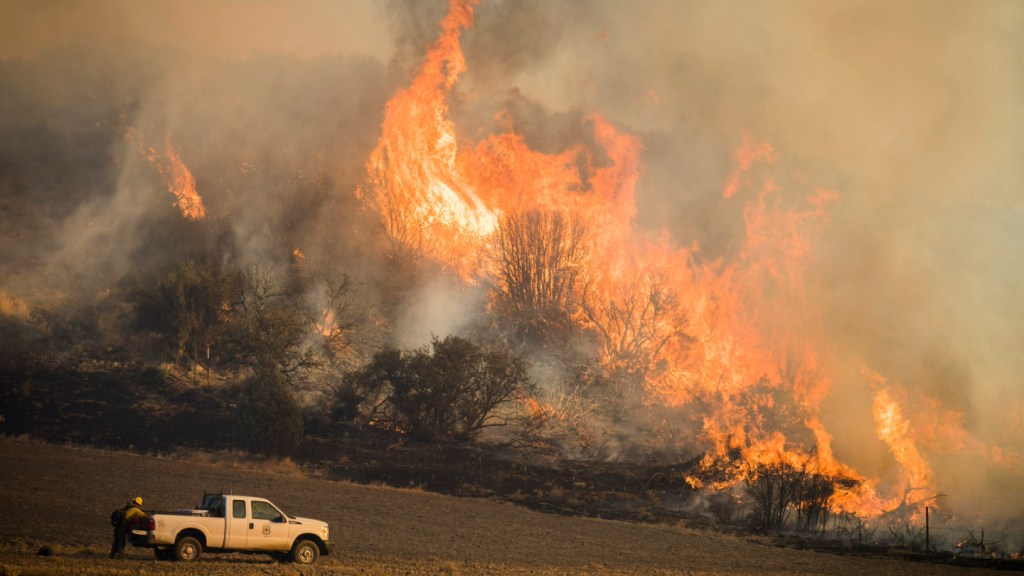
Satellites see double jeopardy for SoCal fire season
New insights into two factors that are creating a potentially volatile Southern California wildfire season come from an ongoing project using NASA and Indian satellite data by scientists at NASA's Jet Propulsion Laboratory, Pasadena, Calif.; and Chapman University, Orange, Calif.
› Full story -
May 10, 2013
For first time, Earth's single-day CO2 tops 400 ppm
The global concentration of carbon dioxide in the atmosphere hit 400 parts per million for the first time in recorded history on Thursday, according to data from the Mauna Loa Observatory in Hawaii.
› Full story -
May 8, 2013
Landsat thermal sensor lights up from volcano's heat
As the Landsat Data Continuity Mission satellite flew over Indonesia's Flores Sea April 29, it captured an image of Paluweh volcano spewing ash into the air. The satellite's Operational Land Imager detected the white cloud of smoke and ash drifting northwest, over the green forests of the island and the blue waters of the tropical sea. The Thermal Infrared Sensor on LDCM picked up even more.
› Full story -
May 2, 2013
NASA opens new era in measuring western U.S. snowpack
A new NASA airborne mission has created the first maps of the entire snowpack of two major mountain watersheds in California and Colorado, producing the most accurate measurements to date of how much water they hold.
› Full story -
May 2, 2013
NASA rover prototype set to explore Greenland ice sheet
NASA's newest scientific rover is set for testing May 3 through June 8 in the highest part of Greenland.
› Full story -
May 1, 2013
NASA, University of Iowa ground measurement campaign to improve flood forecasting
Ground data now being collected in northeastern Iowa by the Iowa Flood Studies experiment will evaluate how well NASA's Global Precipitation Measurement (GPM) mission satellite rainfall data can be used for flood forecasting.
› Full story -
April 30, 2013
Eyes on the Earth: Dust over the four corners region
View one of many amazing satellite images of the Earth in 3D.
› Full story -
April 23, 2013
Satellite observations one key to climate models
In the 1960s, climate science took a quantum leap forward when researchers at the Geophysical Fluid Dynamics Laboratory in Princeton, N.J. developed the first computerized model of Earth’s climate that could account for both atmospheric and oceanic processes. For the first time, scientists could see how the complex interactions between the ocean and the atmosphere influenced global climate. The model was the basis for the first experiment to test the idea of global warming.
› Full story -
April 23, 2013
NASA's HyspIRI sees the forest for the trees and more
To Robert Green, light contains more than meets the eye: it contains fingerprints of materials that can be detected by sensors that capture the unique set of reflected wavelengths. Scientists have used the technique, called imaging spectroscopy, to learn about water on the moon, minerals on Mars and the composition of exoplanets. Green's favorite place to apply the technique, however, is right here on the chemically rich Earth, which is just what he and colleagues achieved this spring during NASA's Hyperspectral Infrared Imager (HyspIRI) airborne campaign.
› Full story -
April 23, 2013
Coal and gas are far more harmful than nuclear power
Human-caused climate change and air pollution remain major global-scale problems and are both due mostly to fossil fuel burning. Mitigation efforts for both of these problems should be undertaken concurrently in order to maximize effectiveness.
› Full story -
April 22, 2013
Beautiful Earth: Nocturnal wonders
Take a peek at our latest Earth image of the month. If you like it, download it!
› Full story -
April 18, 2013
Earth Day Quiz
How is Earth different from all other planets? Take this interactive quiz to find out.
› Full story -
April 15, 2013
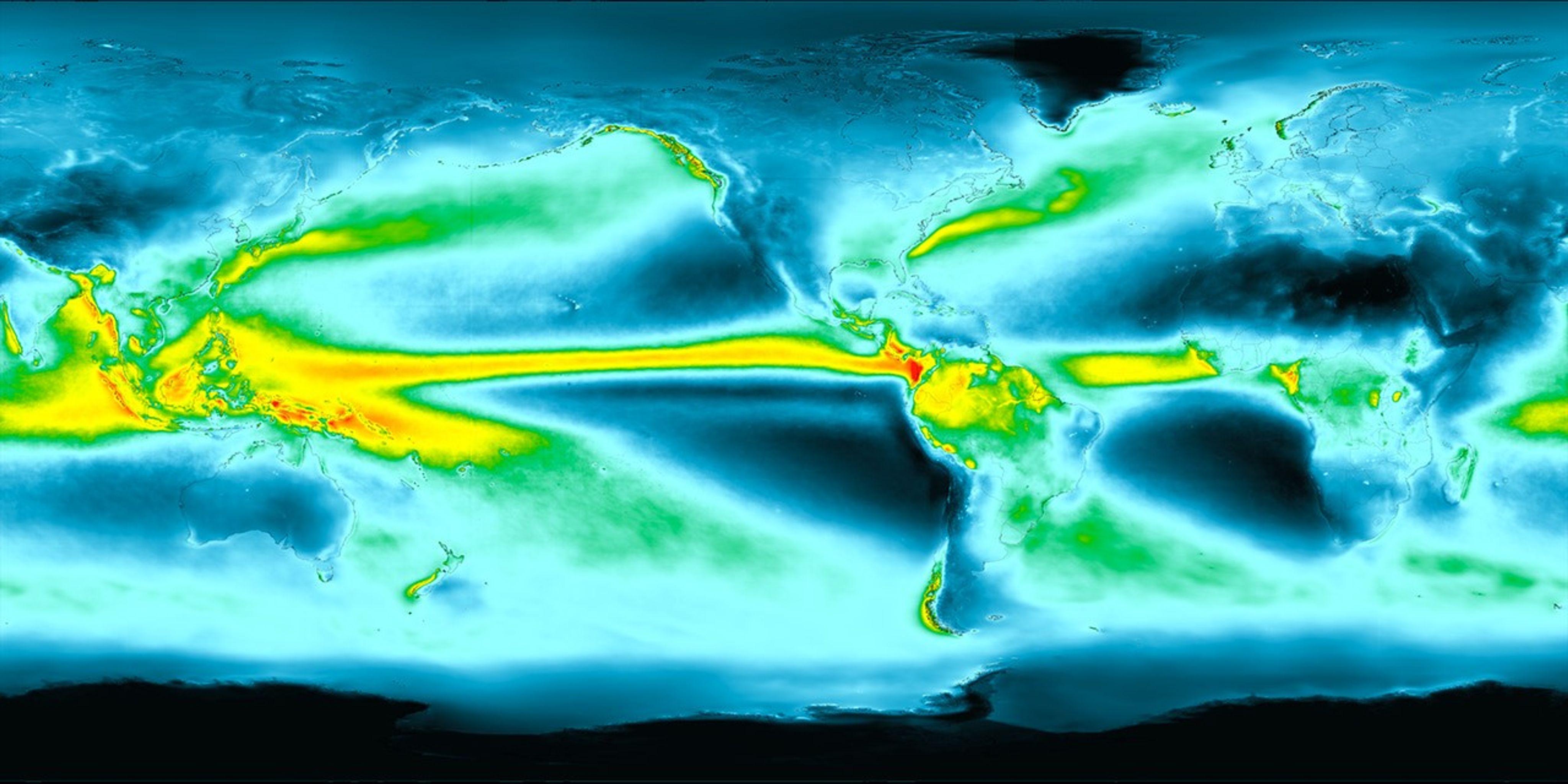
Video 'For Good Measure' shows global reach of NASA's next rain-measuring mission
Observing rainfall has become standard in our modern world. Where the rain goes, so too do the umbrellas -- and flood warnings, drought assessments, estimates for freshwater water reservoirs, long term planning for farmers, alerts for waterborne diseases, even famine early warning systems.
› Full story -
April 11, 2013
Climate.nasa.gov honored for 'Eyes on the Earth' web app
NASA's 'Eyes on the Earth' is a 2013 Webby Honoree
› Full story -
April 9, 2013
Don't let this happen to your planet
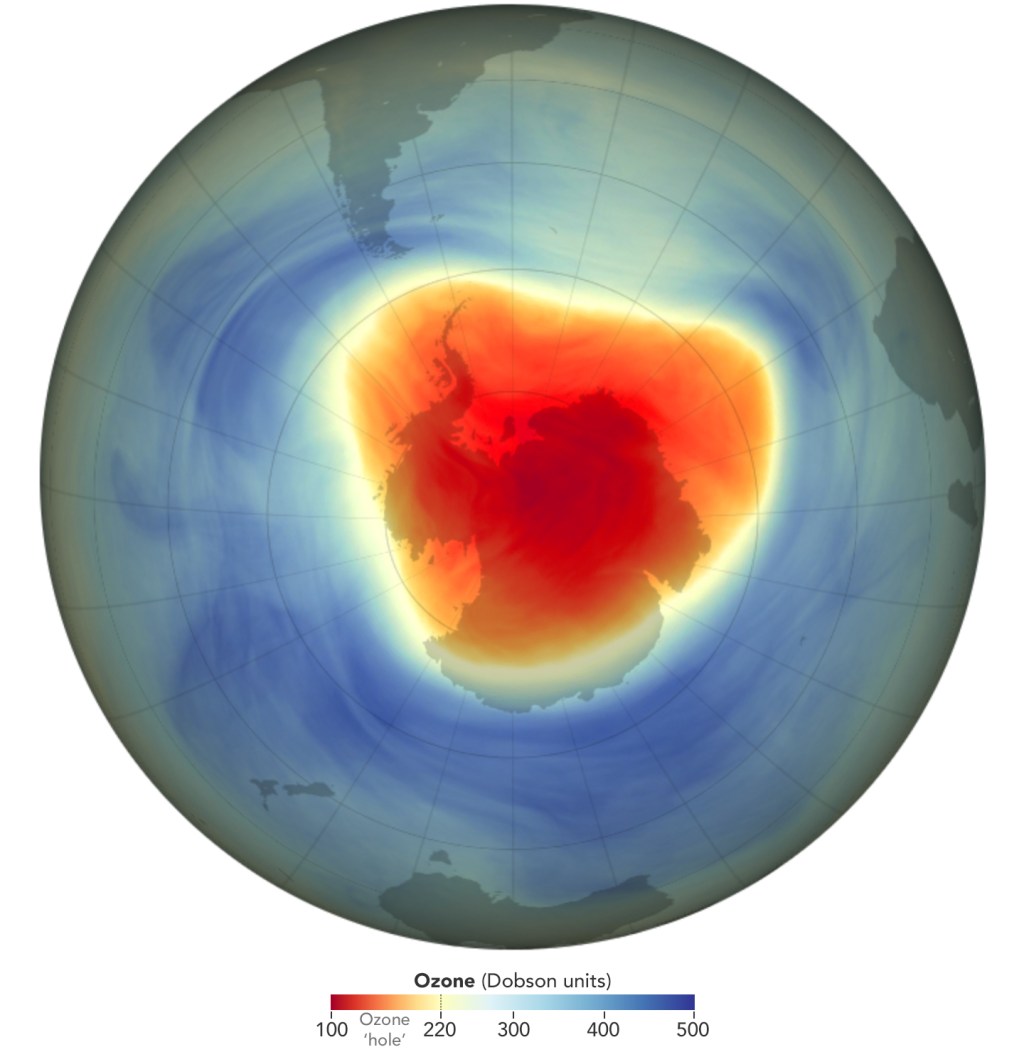
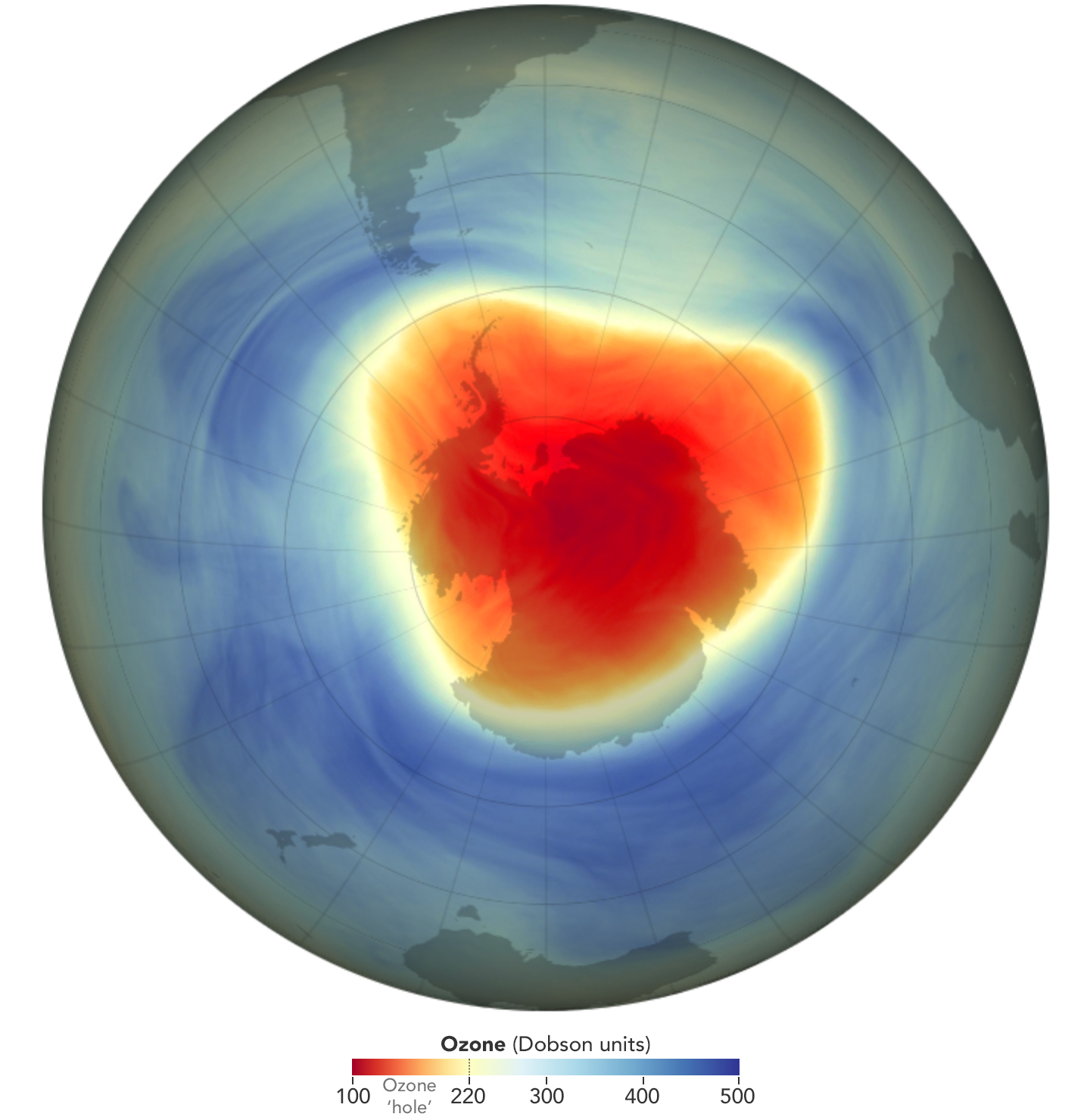
Ozone stinks. People who breathe it gag as their lungs burn. The EPA classifies ground-level ozone as air pollution.
› Full story -
-
April 8, 2013
Severe thunderstorms and climate change
Though thunderstorms are familiar and seemingly non-threatening, severe thunderstorms can lead to dangerous supercells, derechos, and tornadoes.
› Full story -
April 4, 2013
Sea ice max continues downward trend
In September 2012, the ice cap over the Arctic Ocean shrank to its lowest extent on record, about half the size of the average summertime extent from 1979 to 2000. That sea ice minimum continued a long-term trend of diminishing ice cover over the past few decades.
› Full story -
April 4, 2013
NASA flies radar south on wide-ranging expedition
A versatile NASA airborne imaging radar system is showcasing its broad scientific prowess for studying our home planet during a month-long expedition over the Americas.
› Full story -
April 4, 2013
Warm Arctic, chilly mid-latitudes
While a high-pressure weather system brought warmer than normal temperatures to Greenland and northern Canada in March 2013, much of North America, Europe, and Asia shivered through weeks of unseasonably cool temperatures.
› Full story -
April 3, 2013
Earth from orbit in 2012
This video highlights some of the newest satellites in the NASA's fleet, including the versatile Suomi National Polar-orbiting (NPP) satellite, a partnership between NASA and the National Oceanic and Atmospheric Administration, and Aquarius, which measures sea surface salinity and is a joint project between NASA and the Space Agency of Argentina.
› Full story -
April 2, 2013
NASA flies Dragon Eye unmanned aircraft into volcanic plume
NASA Earth science researchers last month traveled to Turrialba Volcano, near San Jose, Costa Rica, to fly a Dragon Eye unmanned aerial vehicle (UAV) -- a small electric aircraft equipped with cameras and sensors -- into the volcano’s sulfur dioxide plume and over its summit crater, to study Turrialba’s chemical environment.
› Full story -
April 1, 2013
Extensive ice fractures in the Beaufort Sea
The Visible Infrared Imaging Radiometer Suite (VIIRS) on the Suomi NPP satellite captured this view of extensive sea-ice fracturing off the northern coast of Alaska.
› Full story -
March 27, 2013
Matters of scale, and why they matter
Recently, we published a data visualization showing tropospheric NO2 over the Indian Ocean. The effort got us to thinking about how we try to present data in a way that’s easy to intepret while staying true to the science.
› Full story